If someone told you that one platform could keep sending visitors to your website for months—or even years—after you publish a single piece of content, you might think it sounds too good to be true.
Yet that’s exactly what makes Pinterest different.
While most social media platforms reward constant posting and real-time engagement, Pinterest works more like a visual search engine. People don’t come to Pinterest just to scroll through updates from friends. They come with a purpose—to find ideas, solve problems, plan purchases, and discover helpful content. Whether someone is looking for home décor inspiration, healthy recipes, budgeting tips, travel guides, or business strategies, Pinterest connects them with content that matches their intent.
That difference changes everything.
Instead of chasing likes or hoping a post goes viral for a few hours, Pinterest gives your content the opportunity to appear in search results long after it’s published. A well-optimized Pin can continue attracting clicks, saves, and website visitors months later, making it one of the few platforms where your work can keep paying off over time.
For creators, bloggers, affiliate marketers, and digital entrepreneurs, that’s a powerful advantage.
Why Pinterest Is Still One of the Best Platforms to Build a Profitable Online Business
Many beginners overlook Pinterest because they assume it’s only for recipes, wedding planning, or DIY projects. While those categories are popular, Pinterest has grown into a much broader discovery platform covering nearly every niche imaginable.
Today, millions of people use Pinterest to search for:
- Business ideas
- Personal finance advice
- Health and wellness tips
- Productivity systems
- Fashion inspiration
- Home improvement projects
- Travel planning
- Digital products
- Online courses
- Marketing strategies
- Technology recommendations
- And countless other topics
More importantly, Pinterest users often have strong intent. They’re not just browsing—they’re actively searching for solutions, inspiration, or products they plan to use. That makes Pinterest traffic highly valuable for businesses and content creators.
Why There’s Never Been a Better Time to Start
Building an online business used to require a large budget, technical expertise, or years of experience. Today, the barriers are much lower.
Modern AI tools can help you:
- Research content ideas faster
- Organize information efficiently
- Generate creative concepts
- Improve writing quality
- Design professional-looking graphics
- Streamline repetitive tasks
Used wisely, these tools allow beginners to focus more on creating valuable content and less on technical obstacles. AI won’t replace creativity or strategy, but it can significantly improve your productivity when combined with your own knowledge and judgment.
At the same time, Pinterest continues to reward helpful, relevant, and well-organized content. That creates an opportunity for new creators who are willing to build a solid foundation instead of looking for shortcuts.
Who This Guide Is For
This guide is designed for anyone who wants to build a sustainable Pinterest-based business, including:
- Complete beginners with no previous Pinterest experience
- Bloggers looking to increase website traffic
- Affiliate marketers who want consistent visitors
- Digital product creators
- Freelancers and online entrepreneurs
- Small business owners
- Content creators interested in building a faceless brand
- Anyone who wants to use AI responsibly to work more efficiently
You don’t need thousands of followers, expensive software, or advanced marketing skills to get started. What you do need is a clear strategy, consistent effort, and a willingness to learn.
That’s exactly what this guide will help you develop.
What You’ll Learn in This Blueprint
Throughout this guide, you’ll build a complete Pinterest business step by step.
You’ll learn how to:
- Understand how Pinterest really works.
- Choose a profitable niche with long-term potential.
- Set up and optimize a Pinterest Business account.
- Use Pinterest SEO to improve visibility.
- Create Pins that attract clicks and saves.
- Build content that earns consistent traffic.
- Use AI to speed up your workflow without sacrificing quality.
- Turn Pinterest traffic into multiple income streams.
- Track your performance and improve your results over time.
- Develop a sustainable system that can grow alongside your business.
Each chapter builds on the previous one, so by the end of this guide, you’ll have a practical framework you can continue using long after you’ve finished reading.
What Makes Pinterest Different from Other Platforms
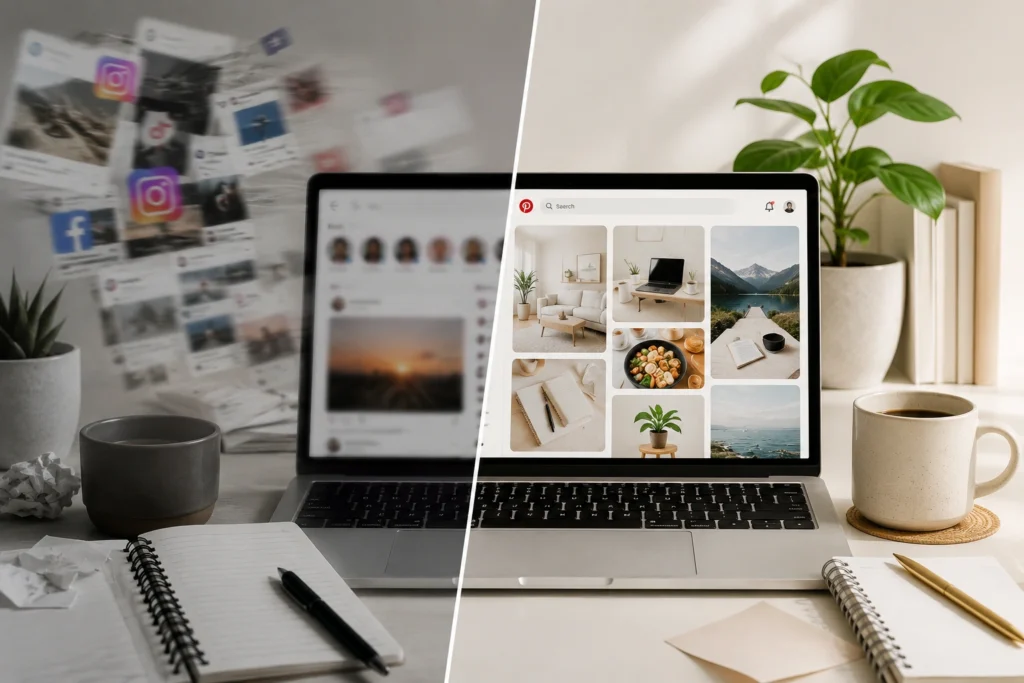
If you’ve ever tried growing on platforms like Instagram, Facebook, TikTok, or X (formerly Twitter), you’ve probably noticed one common challenge: your content has a very short lifespan.
A post might receive engagement for a few hours—or a few days if you’re lucky. After that, it gets buried under newer content, and the cycle starts all over again. To stay visible, you’re expected to keep posting consistently, chase trends, and compete for attention in an endless feed.
Pinterest works differently.
Instead of focusing on what’s happening right now, Pinterest focuses on what people are actively searching for. That simple difference makes it one of the most powerful platforms for creators, bloggers, and online businesses looking to generate long-term traffic.
Pinterest Is a Visual Search Engine, Not Social Media
Many people describe Pinterest as a social media platform, but that definition doesn’t tell the whole story.
At its core, Pinterest is a visual discovery and search engine. Users visit Pinterest with a purpose. They search for ideas, inspiration, products, tutorials, and solutions to specific problems.
For example, someone might search for:
- Healthy meal prep ideas
- Home office inspiration
- Wedding decoration ideas
- Budget planning templates
- Email marketing tips
- Pinterest SEO strategies
- Affiliate marketing ideas
Unlike social platforms, where users passively scroll through updates, Pinterest users actively look for information they can use. That means they’re often much closer to taking action—whether that’s reading a blog post, signing up for a newsletter, downloading a resource, or making a purchase.
For content creators, this creates an opportunity to reach people who are already interested in the topics you cover.
How the Pinterest User Journey Works
Understanding how people use Pinterest is one of the biggest keys to long-term success.
A typical Pinterest journey looks something like this:
- A user has a question, goal, or problem.
- They type relevant keywords into Pinterest’s search bar.
- Pinterest shows Pins that best match their search intent.
- The user clicks a Pin that catches their attention.
- They visit the linked website, blog, or landing page.
- If the content delivers value, they may subscribe, purchase a product, or return later for more.
Notice what isn’t part of this journey: followers.
Unlike many social platforms, Pinterest doesn’t require you to build a massive audience before your content can be discovered. A helpful, well-optimized Pin can appear in search results regardless of how many followers you have.
This levels the playing field for beginners and small businesses.
Why Pinterest Traffic Is Different
Not all website visitors have the same value.
Someone casually scrolling through social media may click your content out of curiosity, but they often leave just as quickly because they weren’t looking for it in the first place.
Pinterest users behave differently.
They arrive with a clear purpose. They’re searching for ideas, answers, or products that solve a specific need. As a result, they’re more likely to spend time reading your content, explore additional pages, join your email list, or take another meaningful action.
This type of intentional traffic often leads to better engagement and stronger long-term relationships with your audience.
The Long Lifespan of Pinterest Content
One of Pinterest’s biggest advantages is content longevity.
On many social platforms, a post disappears from view shortly after it’s published. Pinterest Pins, however, can continue appearing in search results for months—or even years—if they remain relevant and helpful.
Imagine publishing a high-quality article about budgeting and creating several optimized Pins that link to it. Those Pins can continue driving visitors long after you’ve moved on to creating new content.
Over time, each Pin becomes another entry point to your website.
Instead of relying on one viral post, you’re building a growing library of content that works together to attract consistent traffic.
This is one of the reasons many successful Pinterest creators focus on evergreen topics—subjects that remain useful regardless of the season or current trends.
Pinterest Rewards Value Over Popularity
Many creators assume they need thousands of followers to succeed online.
Pinterest proves otherwise.
The platform’s goal is to show users the most relevant and helpful content for their search—not simply content from the most popular accounts.
That means a new creator with well-researched keywords, compelling Pin designs, and genuinely helpful content can compete alongside established publishers.
Success on Pinterest is driven less by popularity and more by relevance, consistency, and quality.
If you consistently create content that solves real problems and aligns with what people are searching for, Pinterest gives your work the opportunity to be discovered again and again.
Key Takeaways
Before moving on, remember these core principles:
- Pinterest is a visual search engine, not a traditional social media platform.
- Users come to Pinterest with clear goals and search intent.
- You don’t need a large following to gain visibility.
- High-quality Pins can continue generating traffic for months or even years.
- Long-term success comes from creating valuable, searchable, evergreen content—not from chasing short-lived trends.
Understanding these principles will shape every strategy covered in the rest of this blueprint. Once you understand how Pinterest’s ecosystem works, the next step is learning the mindset and habits that separate creators who give up after a few weeks from those who build a sustainable, profitable Pinterest business.
Building the Right Mindset for Long-Term Pinterest Success
Before you create your first Pin, design your first graphic, or publish your first blog post, there’s something even more important to build—your mindset.
Many people assume Pinterest success comes from discovering a secret strategy or finding the perfect niche. In reality, the biggest difference between creators who succeed and those who quit often comes down to one thing: consistency.
Pinterest is not a platform that rewards shortcuts. It’s a platform that rewards patience, quality, and continuous improvement.
If you approach Pinterest with realistic expectations and a long-term strategy, you’ll be in a much stronger position than most beginners.
Why Most Beginners Fail
It’s easy to get excited when starting something new.
You create a Pinterest account, design a few Pins, publish them, and check your analytics every day—expecting thousands of impressions overnight.
When that doesn’t happen, frustration sets in.
Many beginners assume they’re doing something wrong, when in reality, they’re simply expecting results too quickly.
Here are the most common reasons people give up:
- They expect instant traffic.
- They stop posting after a few weeks.
- They constantly switch niches.
- They chase every new Pinterest trend.
- They focus on quantity instead of quality.
- They never analyze what’s working.
Pinterest doesn’t reward impatience.
Instead, it rewards creators who consistently publish helpful content over time.
Think of Pinterest like planting a garden.
You don’t plant seeds today and expect a full harvest tomorrow. You prepare the soil, plant consistently, water regularly, and allow time for growth. Pinterest works much the same way.
Set Realistic Expectations
One of the biggest mistakes beginners make is comparing themselves to creators who have been building their Pinterest presence for years.
Every successful Pinterest account started with zero followers, zero monthly views, and zero clicks.
Growth takes time.
During your first few weeks, your focus shouldn’t be on making money. Instead, focus on building a strong foundation.
That means:
- Learning Pinterest SEO.
- Creating high-quality content.
- Designing attractive Pins.
- Publishing consistently.
- Understanding your audience.
As your content library grows, Pinterest gains more data about your account and your content. Over time, this increases your chances of appearing in search results and reaching a larger audience.
The creators who stay consistent are often the ones who experience steady growth months later.
Why Consistency Always Beats Perfection
Many beginners spend hours trying to create the “perfect” Pin.
They adjust fonts dozens of times.
Change colors repeatedly.
Rewrite titles over and over.
Eventually, they become stuck and publish very little.
Perfection feels productive, but it often slows your progress.
A better approach is to focus on continuous improvement.
Publish your best work today.
Learn from the results.
Apply those lessons to your next Pin.
Every new piece of content teaches you something about your audience.
Consistency creates momentum.
Momentum creates data.
Data helps you improve.
Improvement leads to better results.
This cycle is far more valuable than waiting for perfection.
Focus on Building a Content Library
One successful Pin is helpful.
One hundred high-quality Pins are transformative.
Every Pin you publish becomes another opportunity for someone to discover your content.
Instead of thinking:
“I need one viral Pin.”
Think:
“I’m building a valuable content library that grows over time.”
Each blog post.
Each Pin.
Each keyword.
Each board.
Together, they strengthen your overall Pinterest presence.
Over the course of a year, small, consistent efforts can produce results that seem impossible when viewed day by day.
Think Like a Business Owner, Not Just a Content Creator
Many beginners focus only on creating beautiful Pins.
Successful creators think beyond design.
They ask questions like:
- What problem does this content solve?
- Who is searching for this information?
- Why would someone click this Pin?
- What action should visitors take after reading my content?
- How does this piece fit into my overall business?
This shift in thinking changes everything.
You’re no longer just creating content.
You’re building a system that attracts visitors, earns trust, and supports your long-term business goals.
Every Pin becomes part of a larger strategy rather than a standalone piece of content.
Don’t Chase Trends—Build Evergreen Assets
Trending topics can generate short bursts of traffic.
Evergreen content continues attracting visitors long after it’s published.
For example:
A Pin about Christmas gift ideas may perform well for a few weeks each year.
A Pin about how to start a blog, budgeting tips, or Pinterest SEO can remain useful throughout the year.
That doesn’t mean you should ignore seasonal content.
A balanced strategy works best.
Create evergreen content as the foundation of your Pinterest account, then supplement it with seasonal or trending topics when they align with your niche.
This approach provides both stability and growth.
Success Is Built on Small Daily Actions
Building a profitable Pinterest business doesn’t require working twelve hours every day.
Small, consistent actions often produce better results than occasional bursts of intense effort.
A simple daily routine might include:
- Research one new keyword.
- Write one blog section.
- Design one or two Pins.
- Publish fresh content.
- Review your analytics.
- Note one improvement for tomorrow.
These tasks may seem small individually, but together they create a sustainable workflow that compounds over time.
Your Biggest Competitive Advantage
Today, thousands of people have access to the same AI tools, design platforms, and marketing resources.
Technology is no longer the advantage.
Execution is.
The creators who succeed aren’t necessarily the smartest or the most experienced.
They’re the ones who consistently create helpful content, learn from their results, and continue improving long after others have quit.
That’s the mindset this blueprint is designed to help you build.
Choosing a Profitable Pinterest Niche
Choosing the right niche is one of the most important decisions you’ll make. A great Pinterest strategy can’t compensate for a niche that has little demand or weak monetization potential.
The best niches solve real problems, have consistent search demand, and offer multiple ways to earn income.
What Makes a Good Pinterest Niche?
A profitable niche should:
- Have year-round search demand
- Help people solve a specific problem
- Offer affiliate or product opportunities
- Support regular content creation
- Have long-term growth potential
Evergreen vs. Trending Niches
Evergreen topics continue generating traffic over time, while trending topics usually bring short-term spikes.
Evergreen examples:
- Personal finance
- Health & wellness
- Home decor
- Productivity
- Parenting
- Digital marketing
Trending examples:
- Holiday content
- Viral challenges
- Seasonal events
A balanced strategy works best, but evergreen content should be your foundation.
Best Pinterest Niches for Beginners
Some beginner-friendly niches include:
- Personal Finance
- Recipes
- DIY & Crafts
- Home Organization
- Fashion
- Beauty
- Travel
- Blogging
- Affiliate Marketing
- Small Business
- Productivity
- AI Tools
Choose a niche that interests you and has proven demand. You’ll find it much easier to stay consistent when you enjoy creating content around the topic.
Validate Before You Commit
Before investing your time, ask yourself:
- Are people searching for this topic?
- Can I create at least 50–100 content ideas?
- Can this niche generate income?
- Will this topic still be relevant a year from now?
If the answer is “yes” to all four, you’ve likely found a niche worth building.
Setting Up Your Pinterest Business Account the Right Way
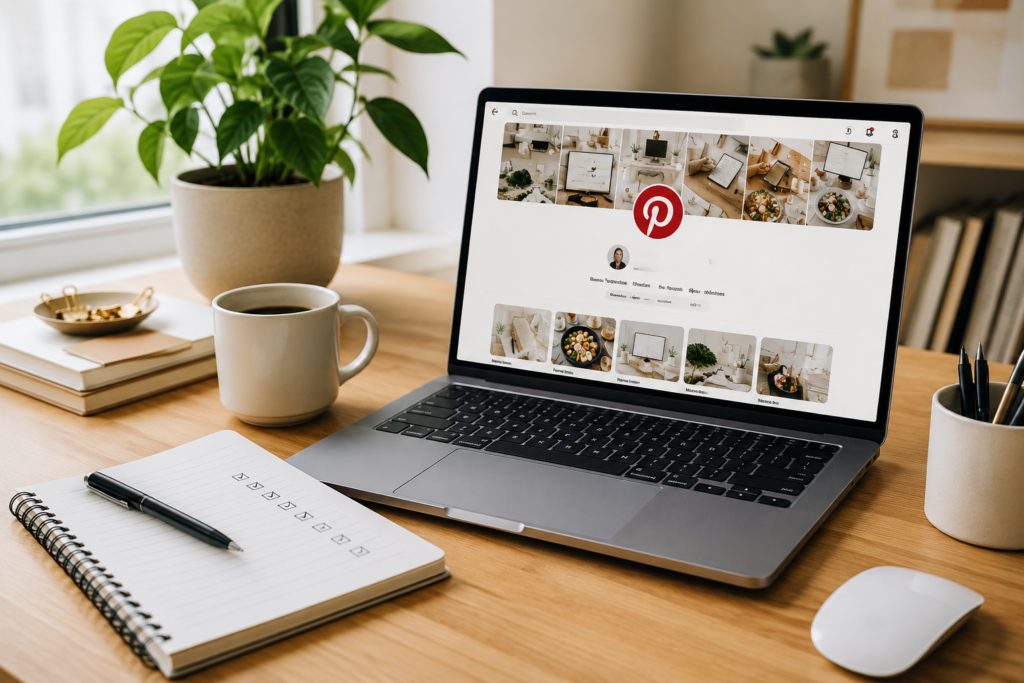
A strong foundation makes everything easier. Before creating Pins, make sure your Pinterest account is set up correctly for search visibility and long-term growth.
Create a Pinterest Business Account
A Business account gives you access to:
- Pinterest Analytics
- Rich Pins
- Website verification
- Performance insights
- Advertising tools (optional)
If you already have a personal account, you can convert it to a Business account for free.
Optimize Your Profile
Your profile should clearly explain who you help and what your content is about.
Make sure to:
- Use a professional profile photo or brand logo.
- Include your primary keyword in your profile name.
- Write a clear, keyword-rich bio.
- Add your website URL.
- Verify your website to build trust.
Create SEO-Friendly Boards
Boards help Pinterest understand your content.
Instead of broad names like:
❌ My Favorites
Use descriptive names like:
- Budgeting Tips
- Pinterest Marketing
- Healthy Recipes
- Home Organization
- AI Productivity Tools
Each board should focus on one topic.
Organize Before You Publish
Create 5–10 relevant boards before publishing your first Pins. This keeps your profile organized and makes it easier for Pinterest to categorize your content.
Essential Tools You’ll Need
You don’t need expensive software to get started. These tools are enough:
- Pinterest – Publish and manage your Pins.
- ChatGPT – Research ideas and create content.
- Canva – Design professional Pinterest Pins.
- Google Analytics – Track website traffic.
- Pinterest Analytics – Measure Pin performance.
Key Takeaway
A well-optimized Business account helps Pinterest understand your content from day one. Spend time setting it up correctly, and you’ll have a stronger foundation for everything you create next.
Understanding Pinterest SEO
Pinterest SEO is the process of optimizing your content so it appears when people search for topics related to your niche. The better Pinterest understands your content, the more likely it is to show your Pins to the right audience.
How Pinterest SEO Works
Pinterest looks at several factors to understand your content, including:
- Pin title
- Pin description
- Board title
- Board description
- Image relevance
- Website content
- User engagement
When these elements align, your chances of ranking improve.
Find the Right Keywords
Start by typing a topic into Pinterest’s search bar. The suggested phrases are real searches made by users.
For example, if your niche is budgeting, you might see:
- Budget planner
- Budget tips
- Budget spreadsheet
- Budgeting for beginners
These are valuable keyword ideas for your content.
Where to Use Keywords
Place your primary keyword naturally in:
- Pin title
- Pin description
- Board title
- Board description
- Blog post title
- Headings
- Image file name (optional)
Avoid stuffing keywords. Write for people first.
Create Content That Matches Search Intent
Ask yourself:
What is the user looking for?
If someone searches “Pinterest SEO Tips,” they expect practical advice—not a general introduction to Pinterest.
The closer your content matches the search intent, the better it will perform.
Common Pinterest SEO Mistakes
Avoid these mistakes:
- Using vague Pin titles
- Ignoring keyword research
- Creating irrelevant boards
- Writing short, unhelpful descriptions
- Publishing low-quality Pins
- Expecting instant rankings
SEO is a long-term strategy. Consistency matters more than shortcuts.
Key Takeaway
Pinterest SEO isn’t about tricking the algorithm—it’s about making your content easy to understand and valuable for the people searching. Focus on relevant keywords, helpful content, and a consistent publishing schedule to build long-term organic traffic.
AI-Powered Content Research & Planning
AI can save you hours of work—but only if you use it the right way. Instead of letting AI create everything, use it to speed up research, brainstorming, and planning while adding your own expertise.
Use AI for Content Research
AI can help you:
- Discover content ideas
- Find common questions
- Create content outlines
- Brainstorm Pin titles
- Organize information
Always review and improve AI-generated suggestions before publishing.
Build Content Around Search Intent
Don’t create content based on guesses. Create content people are already searching for.
Use Pinterest search, Google, and AI together to identify:
- Frequently asked questions
- Popular topics
- Common problems
- Evergreen ideas
Plan Content in Advance
Instead of deciding what to post every day, create a monthly content plan.
For example:
- 8–10 blog posts
- 30–50 fresh Pins
- Seasonal content
- Evergreen content updates
Planning ahead keeps your workflow consistent and reduces last-minute stress.
Don’t Depend on AI
AI is a powerful assistant, not a replacement for your knowledge.
Always:
- Add personal insights.
- Verify facts.
- Rewrite robotic sentences.
- Keep your writing natural and helpful.
Readers trust content that feels authentic.
Key Takeaway
Use AI to work faster—not to replace your creativity. The best results come from combining AI’s efficiency with your own ideas, experience, and unique perspective.
Creating Content That Gets Clicks and Builds Trust
Great Pinterest traffic starts with valuable content. If your content solves a problem and meets the reader’s expectations, they’re more likely to stay, trust you, and come back for more.
Understand Search Intent
Before writing, ask:
What is the reader trying to achieve?
For example, someone searching “Pinterest SEO Tips” wants practical advice, not the history of Pinterest.
Give readers exactly what they’re looking for.
Write Helpful Headlines
A good title should be:
- Clear
- Specific
- Benefit-driven
- Keyword-focused
Examples:
- 10 Pinterest SEO Tips for Beginners
- How to Start a Pinterest Business Account
- Pinterest Marketing Mistakes to Avoid
Focus on Quality, Not Quantity
A shorter article that answers a question well is more valuable than a long article filled with unnecessary information.
Every section should educate, solve a problem, or provide actionable advice.
Make Your Content Easy to Read
Improve readability by:
- Using short paragraphs
- Adding bullet points
- Using clear headings
- Keeping sentences simple
- Removing unnecessary words
The easier your content is to scan, the better the user experience.
Build Trust
Readers are more likely to trust content that is:
- Accurate
- Well-organized
- Honest
- Up to date
- Based on real examples or practical experience
Never exaggerate results or make promises you can’t support.
Key Takeaway
Creating content isn’t about publishing more—it’s about publishing content that genuinely helps people. When readers find value in your articles, they’re more likely to click, stay, share, and return for more.
Designing High-Converting Pinterest Pins

Your Pin is the first thing people see. A great design grabs attention, but its real job is to make people click.
A beautiful Pin that gets no clicks isn’t effective.
Keep Your Design Simple
Avoid clutter. Focus on one clear message.
A good Pin should include:
- A strong headline
- High-quality image
- Easy-to-read fonts
- Brand colors (optional)
- Clean layout with enough white space
Write Headlines That Spark Curiosity
Your Pin title should clearly communicate the benefit.
Examples:
- 15 Easy Budgeting Tips for Beginners
- Pinterest SEO Checklist
- How to Start a Profitable Blog
- ADHD Productivity Hacks That Actually Work
Avoid clickbait or misleading headlines.
Use High-Quality Images
Choose images that are:
- Bright and clear
- Relevant to the topic
- Professional-looking
- Mobile-friendly
Lifestyle and realistic photos often perform better because they help users imagine the outcome.
Follow Pinterest Design Best Practices
For better visibility:
- Use a vertical image (1000 × 1500 px).
- Keep text large and readable.
- Leave enough white space.
- Don’t overload the design with too many elements.
- Make your CTA visible but natural.
Create Multiple Pin Designs
Don’t rely on a single design.
Create 3–5 different Pins for the same blog post by changing:
- Headlines
- Images
- Colors
- Layouts
- Typography
This helps you discover which style performs best.
Stay Consistent
Use a consistent design style so people begin to recognize your brand over time.
Simple branding creates familiarity and builds trust.
Key Takeaway
A high-converting Pin isn’t just attractive—it clearly communicates value and encourages users to click. Keep your designs clean, your message clear, and always create multiple variations to improve your chances of success.
Writing Pinterest Titles & Descriptions That Drive Traffic
Your Pin design grabs attention, but your title and description help Pinterest understand your content and encourage users to click.
Write Keyword-Rich Titles
Use your primary keyword naturally and clearly describe what users will learn.
Examples:
- Pinterest SEO Tips for Beginners
- How to Start a Pinterest Business Account
- Best AI Tools for Pinterest Marketing
Keep titles clear, specific, and benefit-focused.
Write Helpful Descriptions
A good description should:
- Explain what the Pin is about.
- Include relevant keywords naturally.
- Encourage users to click for more details.
Avoid stuffing keywords or writing vague descriptions.
Use Natural Language
Write as if you’re speaking directly to the reader.
Instead of:
❌ Pinterest SEO, Pinterest marketing, Pinterest tips…
Write:
✅ Learn practical Pinterest SEO strategies to increase your visibility, drive more traffic, and grow your business.
Natural writing improves both readability and SEO.
Should You Use Hashtags?
Hashtags have very little impact on Pinterest today.
Instead of focusing on hashtags, spend your time creating:
- Better titles
- Better descriptions
- Better Pin designs
- Better content
These have a much bigger impact on performance.
Test Different Headlines
Don’t assume your first title is the best.
Try different variations using:
- Numbers
- Questions
- How-to formats
- Benefit-driven headlines
Small changes can significantly improve your click-through rate.
Key Takeaway
Great Pinterest titles and descriptions help both users and Pinterest understand your content. Focus on clarity, relevance, and value rather than trying to fit in as many keywords as possible.
Publishing & Growing Your Pinterest Account
Creating great content is only half the job. Publishing consistently helps Pinterest understand your account and gives your content more opportunities to be discovered.
Publish Consistently
You don’t need to publish dozens of Pins every day.
Start with a realistic schedule, such as:
- 1–3 fresh Pins per day
- 5–15 Pins per week
Consistency is more important than volume.
Focus on Fresh Content
Pinterest favors fresh content.
A fresh Pin can be:
- A new blog post
- A new Pin design for an existing article
- Updated content with a different title or image
Create multiple Pin designs for each piece of content to increase your reach.
Use Scheduling Tools
If you can’t post daily, use a scheduling tool to stay consistent.
Scheduling helps you:
- Save time
- Maintain a regular posting schedule
- Plan content in advance
Monitor Your Performance
Check your Pinterest Analytics regularly to see:
- Which Pins get the most clicks
- Which topics perform best
- What drives the most outbound traffic
- Which designs receive the most saves
Use these insights to improve future content.
Be Patient
Pinterest growth takes time.
Some Pins may gain traction within days, while others may take weeks or even months. Keep creating helpful content and trust the process.
Turning Pinterest Traffic into Income
Traffic is valuable, but the real goal is to turn that traffic into income. Pinterest can support multiple monetization methods, allowing you to build a more sustainable online business.
Affiliate Marketing
Recommend products or services you genuinely trust and earn a commission when someone makes a purchase through your affiliate link.
Focus on providing honest reviews and helpful recommendations instead of promoting products just for the commission.
Drive Traffic to Your Blog
Your blog is one of your biggest business assets.
Use Pinterest to send visitors to articles that:
- Educate your audience
- Build trust
- Generate ad revenue
- Promote affiliate products
- Capture email subscribers
Sell Digital Products
Digital products are a popular way to monetize Pinterest traffic because they can be sold repeatedly without managing inventory.
Examples include:
- Ebooks
- Templates
- Checklists
- Printables
- Online courses
- Planners
Build an Email List
Don’t rely only on Pinterest.
Offer a free resource, such as a checklist or guide, in exchange for an email address. This helps you build a direct relationship with your audience and market to them in the future.
Diversify Your Income
Avoid depending on a single income source.
A strong Pinterest business often combines:
- Affiliate marketing
- Blog advertising
- Digital products
- Email marketing
- Sponsored content or services (if relevant)
Multiple income streams create a more stable and scalable business.
Using AI to Scale Your Pinterest Business
AI can help you work faster, but it shouldn’t replace your creativity or expertise. The best results come from combining AI with your own ideas and experience.
Use AI for Research
AI can quickly help you:
- Brainstorm content ideas
- Create outlines
- Find blog topics
- Generate Pin title ideas
- Organize information
Always review and refine the output before publishing.
Speed Up Content Creation
Use AI to assist with:
- First drafts
- Blog outlines
- Pin descriptions
- Social media captions
- Email newsletters
Think of AI as your assistant, not your author.
Create Better Pin Designs
AI can also improve your design workflow by helping you:
- Generate image ideas
- Write text for Pins
- Suggest color combinations
- Create multiple design variations
Review every design to ensure it matches your brand.
Automate Repetitive Tasks
Save time by using AI for tasks like:
- Repurposing blog posts
- Summarizing content
- Creating content calendars
- Brainstorming keywords
Automation lets you spend more time creating high-value content.
Keep Your Content Human
Before publishing, always:
- Add your own insights.
- Check facts and statistics.
- Rewrite awkward or robotic sentences.
- Make sure the content sounds natural.
People trust content that feels authentic.
Analytics & Continuous Improvement
Growing on Pinterest isn’t about guessing—it’s about learning from your results. Regularly reviewing your analytics helps you understand what works and where you can improve.

Track the Right Metrics
Focus on these key metrics:
- Impressions
- Outbound clicks
- Saves
- Click-through rate (CTR)
- Top-performing Pins
These numbers show how your content is performing.
Identify Your Best Content
Look for patterns in your highest-performing Pins.
Ask yourself:
- Which topics get the most clicks?
- Which designs attract more saves?
- Which titles perform best?
Use these insights to create similar content.
Improve Underperforming Pins
Not every Pin will succeed the first time.
Try updating:
- The headline
- The design
- The description
- The keywords
Sometimes small changes can make a big difference.
Review Your Performance Regularly
Set aside time each month to review your analytics and adjust your strategy based on real data—not assumptions.
Continuous improvement leads to long-term growth.
Common Pinterest Mistakes Beginners Make
Everyone makes mistakes when starting out. The key is to learn from them early so you don’t waste time or slow your growth.
Ignoring Pinterest SEO
Many beginners publish Pins without doing keyword research.
Always optimize your:
- Pin titles
- Pin descriptions
- Board names
- Blog content
SEO helps Pinterest understand and rank your content.
Posting Inconsistently
Publishing a lot one week and then disappearing for a month makes it harder to build momentum.
Create a schedule you can realistically maintain.
Designing Weak Pins
A cluttered design or unclear headline can reduce clicks.
Keep your Pins:
- Simple
- Readable
- Eye-catching
- Relevant to the content
Focusing Only on Traffic
Traffic is important, but it should lead somewhere.
Guide visitors to:
- Helpful blog posts
- Email sign-up pages
- Affiliate recommendations
- Digital products
Turn traffic into long-term business growth.
Giving Up Too Soon
Pinterest is a long-term platform. Some Pins may take weeks or months to gain traction.
Stay consistent, keep improving, and trust the process.
Your 30-Day Pinterest Action Plan
Success on Pinterest comes from consistent action. Use this simple 30-day plan to build a strong foundation.
Week 1: Set Up Your Foundation
- Create a Pinterest Business account.
- Optimize your profile.
- Verify your website.
- Create 5–10 niche-specific boards.
- Research your primary keywords.
Week 2: Create Content
- Publish your first blog posts.
- Design 10–15 high-quality Pins.
- Write SEO-friendly titles and descriptions.
- Organize your content calendar.
Week 3: Publish & Optimize
- Start publishing fresh Pins consistently.
- Create multiple Pin variations.
- Monitor your first analytics.
- Improve titles and designs based on performance.
Week 4: Review & Scale
- Analyze your top-performing Pins.
- Create more content around successful topics.
- Plan next month’s content.
- Continue posting consistently.
Build a Simple Routine
You don’t need to spend hours every day. Even 30–60 minutes daily can make a big difference when you’re consistent.
A simple daily routine:
- Research one content idea.
- Create one Pin.
- Publish fresh content.
- Check your analytics.
- Plan tomorrow’s task.
Frequently Asked Questions (FAQs)
Do I need a website to make money with Pinterest?
No, but having a website gives you more control and more monetization opportunities through blogging, affiliate marketing, and digital products.
How long does it take to get Pinterest traffic?
It varies. Some Pins gain traction within a few weeks, while others may take several months. Consistency is the key.
Do I need followers to succeed on Pinterest?
No. Pinterest is a search engine, so well-optimized Pins can reach users even if you have very few followers.
Can I use AI to create Pinterest content?
Yes. AI can help with research, writing, and design, but always review and personalize the content before publishing.
How many Pins should I publish?
Quality matters more than quantity. Start with 1–3 fresh Pins per day and stay consistent.
Is Pinterest still worth using?
Absolutely. Pinterest continues to be a valuable source of long-term, organic traffic for bloggers, businesses, and content creators.
Conclusion: Your Pinterest Journey Starts Today
You’ve now learned the fundamentals of building a profitable Pinterest business—from choosing a niche and optimizing your account to creating content, driving traffic, and generating income.
Remember, success won’t happen overnight. It comes from publishing helpful content, improving with every Pin, and staying consistent.
Start small, keep learning, and focus on providing value to your audience. Over time, your content library will grow, your traffic will increase, and your Pinterest business will become a valuable long-term asset.
Your next step is simple: take action. Create your first Pin, publish your first piece of content, and begin building the Pinterest business you’ve envisioned. Every successful creator started with a single Pin—and today is the perfect day to start yours.