If you’ve ever wanted to earn money online by selling something you’ve created, Gumroad is one of the easiest places to start. Whether you’re a writer, designer, educator, freelancer, or content creator, you can use Gumroad to sell digital products directly to customers around the world—without building a complicated website or managing physical inventory.
Digital products have become one of the fastest-growing online business models because you create them once and can sell them repeatedly. From eBooks and Notion templates to AI prompt packs, printable planners, online courses, and design assets, there are countless opportunities to turn your knowledge or skills into a source of income.
What makes Gumroad especially appealing for beginners is its simplicity. You don’t need coding skills, advanced technical knowledge, or a large audience to get started. The platform handles payments, delivers your files automatically, and gives you everything you need to launch your first digital product from a single dashboard.
That said, simply uploading a product isn’t enough. Success on Gumroad comes from choosing the right product idea, creating something people genuinely want, presenting it professionally, and consistently promoting it to the right audience. Many new creators struggle not because the platform is difficult, but because they skip these essential steps.
This beginner’s guide walks you through the entire process—from setting up your Gumroad store to creating your first digital product, optimizing your product page, attracting customers, and growing your sales over time. Each section is designed to help you understand not just what to do, but why it matters and how to avoid common beginner mistakes.
What You’ll Learn in This Guide
By the end of this guide, you’ll know how to:
- Understand how Gumroad works and whether it’s the right platform for you.
- Create and optimize your Gumroad account professionally.
- Choose digital product ideas with real market demand.
- Create high-quality products that customers are willing to buy.
- Write product pages that improve conversions.
- Price your products with confidence.
- Promote your products using free and sustainable marketing strategies.
- Generate your first sales and build a long-term digital product business.
Whether your goal is to launch your first eBook, sell Notion templates, offer AI prompt packs, or build a complete catalog of digital products, this guide will give you a practical roadmap to get started.
Let’s begin by understanding exactly what Gumroad is and why it has become one of the most popular platforms for independent creators.
What Is Gumroad?
Gumroad is an eCommerce platform designed specifically for creators who want to sell digital products, memberships, software, courses, and other downloadable content directly to customers. Instead of spending weeks building an online store, integrating payment gateways, and setting up file delivery, you can create an account, upload your product, and start selling in just a short time.

Since its launch, Gumroad has become a popular choice among independent creators because it removes many of the technical barriers involved in starting an online business. The platform takes care of payment processing, secure file delivery, customer receipts, and basic sales management, allowing you to focus on creating valuable products instead of managing complicated technology.
Whether you’re selling a single eBook or building an entire digital product business, Gumroad offers a simple way to reach customers worldwide.
How Does Gumroad Work?
The selling process on Gumroad is straightforward:
- Create a free creator account.
- Upload your digital product.
- Add a title, description, images, and price.
- Publish your product page.
- Share your product link or attract customers through your marketing efforts.
- Customers purchase your product.
- Gumroad automatically processes the payment and delivers the files instantly.
Once your product is published, it can be sold repeatedly without requiring additional inventory or shipping. This makes digital products one of the most scalable business models available.
Who Should Use Gumroad?
Gumroad is designed for anyone who wants to monetize their knowledge, creativity, or digital skills. It’s especially suitable for:
- Writers and authors selling eBooks
- Designers offering templates, graphics, fonts, or UI kits
- Content creators selling guides, resources, and digital downloads
- Freelancers creating business templates and client resources
- Educators selling online courses and workbooks
- Developers distributing software, scripts, or code libraries
- Artists selling digital artwork and creative assets
- Coaches and consultants offering worksheets, planners, and toolkits
Even if you’re starting without an audience, Gumroad provides a simple foundation for launching your first digital product business.
What Can You Sell on Gumroad?
One of Gumroad’s biggest strengths is the variety of products you can offer. Popular digital products include:
- eBooks and PDF guides
- Notion templates
- Canva templates
- AI prompt collections
- Printable planners and journals
- Resume and portfolio templates
- Business checklists and worksheets
- Excel and Google Sheets templates
- Online courses and video tutorials
- Stock photos, icons, and design assets
- Software, plugins, and code snippets
- Music, sound effects, and digital downloads
- Memberships and subscription-based content
Because these products are delivered digitally, there are no manufacturing costs, inventory management, or shipping delays. Once your product is ready, it can generate sales around the clock.
Why So Many Beginners Choose Gumroad
Many eCommerce platforms are built for large online stores with physical inventory, making them unnecessarily complex for first-time creators. Gumroad takes a different approach by focusing on simplicity.
Instead of worrying about hosting, checkout systems, payment gateways, or digital file delivery, you can manage everything from one dashboard. This allows beginners to spend more time creating products and learning marketing rather than solving technical problems.
For creators who want to launch quickly and validate an idea before investing in a larger online store, Gumroad offers a practical and beginner-friendly starting point.
Now that you understand what Gumroad is and how it works, the next step is learning why it has become one of the most popular platforms for selling digital products online.
Why Sell Digital Products on Gumroad?
Choosing the right platform is one of the first decisions every creator has to make. While there are many marketplaces and eCommerce solutions available today, Gumroad continues to be a popular option because it keeps the selling process simple without sacrificing the features most creators need.
For beginners, the biggest challenge isn’t creating an online store—it’s launching quickly, making the first sale, and learning what customers actually want. Gumroad helps remove much of the technical complexity so you can focus on creating valuable products and growing your business.
Here are some of the biggest reasons creators choose Gumroad to sell digital products.
Beginner-Friendly Setup
One of Gumroad’s greatest advantages is its ease of use. You don’t need web development experience, coding knowledge, or advanced design skills to get started.
Creating a store usually takes only a few steps:
- Create your account.
- Customize your profile.
- Upload your product.
- Set a price.
- Publish your product page.
This straightforward setup makes Gumroad an excellent choice for first-time digital product sellers.
No Website Required
Many new creators believe they need an expensive website before they can start selling online. While having your own website can be beneficial in the long run, it isn’t a requirement with Gumroad.
Each product receives its own dedicated sales page where customers can learn about your offer, make a secure purchase, and instantly download their files.
This allows you to validate your product idea without investing time and money into building a complete website.
Secure Payment Processing
Handling online payments can be intimidating for beginners. Gumroad simplifies the process by managing payment collection for you.
Customers can complete their purchases using supported payment methods, while Gumroad securely processes the transaction and sends confirmation emails automatically.
This means you don’t have to integrate separate payment gateways or worry about complicated checkout systems.
Instant Digital Delivery
After a purchase is completed, customers receive immediate access to the digital files they’ve purchased.
Whether you’re selling:
- PDF guides
- Notion templates
- ZIP files
- Video courses
- Printable planners
- Design resources
Gumroad automatically delivers your products without requiring any manual work from you. This creates a smooth buying experience and saves time as your sales grow.
Low Startup Costs
One reason digital products are attractive is that they require very little upfront investment.
Unlike physical products, you don’t need to purchase inventory, rent storage space, or pay for shipping. Your primary investment is the time spent creating a product that solves a real problem.
Because of this low barrier to entry, many creators launch their first digital product business with only a few essential tools.
Sell to Customers Worldwide
Your audience isn’t limited to your local area.
Once your product is published, anyone with internet access can discover and purchase it. Whether your customers are in North America, Europe, Asia, or Australia, they can buy your product at any time of the day.
This global reach gives creators the opportunity to build an international customer base without opening multiple stores or handling international shipping.
Easy Product Management
As your business grows, managing multiple products becomes increasingly important.
Gumroad lets you organize your digital products from a single dashboard where you can:
- Add new products
- Update existing files
- Change prices
- Monitor sales
- View customer information
- Track product performance
This centralized workflow makes it much easier to expand your product catalog over time.
Build a Scalable Digital Business
Unlike freelance work, where you’re paid once for each completed project, digital products can continue generating revenue long after they’ve been created.
For example, an eBook, template, or prompt pack can be sold hundreds—or even thousands—of times without recreating the product for each customer.
As you publish more products and improve your marketing, your business can become increasingly scalable. Many successful creators eventually build product libraries, bundles, memberships, and recurring revenue streams using the same foundation they started with.
Is Gumroad the Right Choice?
Gumroad isn’t the perfect solution for every type of business, but for creators who want to launch digital products quickly and keep the selling process simple, it remains one of the most accessible platforms available.
If your goal is to start selling eBooks, templates, printables, AI prompts, courses, or other downloadable products without dealing with unnecessary technical hurdles, Gumroad provides an excellent place to begin.
Next, let’s look at the advantages and limitations of the platform so you can decide whether Gumroad is the right fit for your business.
Is Gumroad Worth It for Beginners?
If you’re just starting your journey as a digital product creator, choosing the right platform can feel overwhelming. With options like Shopify, Etsy, Payhip, Lemon Squeezy, and WooCommerce available, it’s natural to wonder whether Gumroad is still a good choice.
The answer depends on your goals.
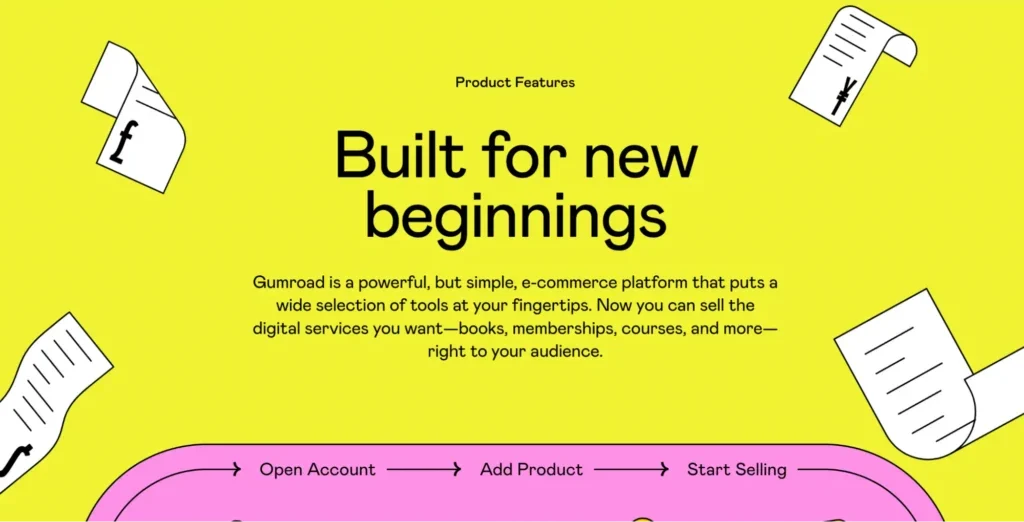
If you want a simple platform where you can create an account, upload a digital product, and start selling without worrying about website development or complex technical setup, Gumroad is one of the easiest platforms to begin with. However, like any platform, it has both advantages and limitations.
Let’s take a closer look.
Pros of Using Gumroad
Easy to Get Started
Gumroad is designed with simplicity in mind. You can create an account, upload your product, add pricing, and publish your store without any technical experience.
For beginners, this means spending more time creating products instead of learning web development.
No Inventory or Shipping
Since Gumroad focuses on digital products, there’s no need to manage inventory, packaging, or shipping.
Customers receive instant access to their purchase automatically, making the entire sales process almost hands-free.
Built-In Product Delivery
One of Gumroad’s biggest advantages is automated delivery.
After a successful purchase, buyers immediately receive download links or access instructions without requiring any manual work from you. This creates a better customer experience while saving you time.
Global Selling Made Simple
Whether your customers live in the United States, Europe, Asia, Australia, or anywhere else, they can purchase your products online.
You don’t have to worry about international shipping or physical logistics, allowing you to reach a worldwide audience from day one.
Easy Product Updates
Digital products often improve over time.
With Gumroad, you can update your files whenever needed. New customers receive the latest version, and depending on your product settings, existing customers can also access updated files.
This makes it easier to maintain high-quality products and continually increase their value.
Suitable for Many Product Types
Gumroad supports a wide variety of digital products, including:
- eBooks
- PDF guides
- Notion templates
- Canva templates
- AI prompt packs
- Online courses
- Software
- Music
- Design assets
- Memberships
- Printable products
This flexibility allows creators to experiment with different product ideas without changing platforms.
Cons of Using Gumroad
While Gumroad is beginner-friendly, it’s important to understand its limitations before building your business around it.
Transaction Fees
Gumroad charges fees on every sale. Although this eliminates monthly subscription costs for many creators, the fees can become more noticeable as your sales volume grows.
If your business reaches a larger scale, you may eventually compare the long-term costs with other eCommerce platforms.
Limited Store Customization
Your Gumroad storefront is intentionally simple.
While this makes setup quick, it also means you have less control over the appearance and branding compared to building your own website with platforms like WordPress or Shopify.
Creators who want complete design flexibility may eventually outgrow Gumroad.
You’re Building on a Third-Party Platform
Like any marketplace, Gumroad controls the platform, features, and policies.
While this isn’t necessarily a disadvantage for beginners, many experienced creators eventually build their own websites alongside Gumroad to have greater control over their brand and customer experience.
Who Should Choose Gumroad?
Gumroad is an excellent choice if you:
- Are launching your first digital product.
- Want to validate a business idea quickly.
- Prefer a simple selling process.
- Don’t want to build a website yet.
- Plan to sell downloadable products.
- Have a limited startup budget.
- Want to focus on creating instead of managing technology.
For many creators, Gumroad serves as an ideal starting point before expanding into a larger online business.
When Another Platform May Be Better
Although Gumroad works well for most beginners, another platform may be a better fit if you:
- Need a fully customized online store.
- Sell a large catalog of physical products.
- Require advanced eCommerce features.
- Want complete control over your checkout experience.
- Plan to build a complex online brand with custom functionality.
Many successful creators actually use Gumroad during the early stages of their business and later expand to a dedicated website as their audience and product catalog grow.
Final Verdict
For beginners who want the fastest path to selling digital products, Gumroad remains one of the most practical platforms available. It removes many of the technical barriers that discourage new creators and lets you focus on what matters most—creating valuable products and finding your first customers.
While it isn’t the perfect solution for every business, its ease of use, automated delivery, and low barrier to entry make it an excellent place to start.
In the next section, we’ll walk through how to create your Gumroad account and set up a professional storefront that builds trust with potential buyers from day one.
Create Your Gumroad Account

Before you can start selling digital products, you need to create and set up your Gumroad account. Fortunately, the process is straightforward and usually takes less than 30 minutes.
A well-configured account does more than just allow you to publish products—it also helps establish credibility. Customers are far more likely to purchase from a creator who has a professional profile, clear branding, and complete account information.
Follow the steps below to build a solid foundation for your digital product business.
Step 1: Sign Up for a Gumroad Account
Visit the official Gumroad website and click Start Selling or Sign Up.
You’ll be asked to provide basic information, including:
- Your name or brand name
- A valid email address
- A secure password
After submitting your details, Gumroad will create your creator account.
Tip: If you’re building a long-term business, consider using your brand name instead of a personal name. This makes it easier to expand your product catalog in the future.
Step 2: Verify Your Email Address
After signing up, Gumroad will send a verification email.
Open your inbox and click the verification link to activate your account. If you don’t see the email immediately, check your spam or promotions folder.
Email verification helps protect your account and enables full access to Gumroad’s features.
Step 3: Complete Your Creator Profile
Your profile is often the first thing potential customers notice. A professional profile builds trust and can improve your conversion rate.
Take a few minutes to complete the following sections:
- Upload a clear profile photo or brand logo.
- Choose a professional display name.
- Write a short bio explaining what you create.
- Add your website or portfolio if you have one.
- Include links to your social media profiles.
Your bio should clearly communicate who you help and what kind of products you sell.
Example:
“Helping freelancers and creators grow their online business with practical templates, guides, and digital resources.”
Keep it concise, informative, and customer-focused.
Step 4: Connect Your Payment Method
To receive payments, you’ll need to connect a supported payout method.
Depending on your country, Gumroad may support options such as:
- Direct bank transfer
- Stripe
- PayPal (where available)
You’ll also need to complete any required identity verification before receiving payouts.
It’s a good idea to finish this step before publishing your first product so there are no delays when you start making sales.
Step 5: Customize Your Store
Think of your Gumroad profile as your online storefront.
A clean and consistent appearance makes your brand look more professional.
Consider customizing:
- Store name
- Profile image
- Banner image
- Brand colors
- Creator bio
- Social links
Consistency across your branding helps customers recognize your products and creates a more polished buying experience.
Step 6: Review Your Account Settings
Before uploading your first product, spend a few minutes reviewing your account settings.
Make sure you have:
- Verified your email address
- Completed your creator profile
- Connected your payout method
- Added your branding
- Reviewed notification settings
- Checked your payout information
Completing these details now helps you avoid unnecessary issues later.
Common Mistakes to Avoid
Many beginners rush through the setup process, which can make their store look incomplete or untrustworthy.
Avoid these common mistakes:
- Using a blurry or low-quality profile picture.
- Leaving your bio empty.
- Choosing an unprofessional store name.
- Forgetting to verify your email.
- Publishing products before connecting your payout method.
- Ignoring your branding and visual identity.
Taking a little extra time during setup creates a much stronger first impression.
Choose a Profitable Digital Product
One of the biggest mistakes new creators make is spending weeks—or even months—building a product before confirming that people actually want it. Creating a high-quality digital product is important, but choosing the right idea is even more critical.
A profitable product solves a specific problem for a specific audience. The more clearly you define who your product is for and what problem it solves, the easier it becomes to attract buyers.

Instead of trying to create something for everyone, focus on helping a particular group achieve a specific result.
Start With a Problem, Not a Product
Many beginners think about the product first.
They decide to create an eBook, a template, or a course without asking whether anyone is actively looking for it.
A better approach is to start with a problem.
Ask yourself:
- What questions do people ask repeatedly?
- What tasks do they struggle with?
- What would save them time or money?
- What skills do you have that others want to learn?
Once you’ve identified a common problem, you can choose the best type of digital product to solve it.
Find a Profitable Niche
A niche is a focused segment of a larger market. Choosing a niche allows you to create products that speak directly to a specific audience instead of trying to appeal to everyone.
Some beginner-friendly niches include:
- Personal finance
- Productivity
- Freelancing
- Graphic design
- Content creation
- AI tools and prompts
- Small business
- Online marketing
- Education
- Health and fitness
- Career development
- Programming
Rather than targeting a broad topic like “Productivity,” narrow it down.
For example:
- Productivity for college students
- Productivity for remote workers
- Productivity for freelancers
- Productivity using Notion
The more specific your niche, the easier it becomes to stand out.
Validate Your Product Idea
Before creating your product, make sure there’s real demand.
You can validate an idea by:
- Searching for similar products on Gumroad.
- Looking at best-selling products in your niche.
- Reading customer reviews to identify common problems.
- Browsing Reddit discussions.
- Exploring Facebook groups and online communities.
- Checking Pinterest trends.
- Researching Google search queries.
- Using keyword research tools.
If people are already paying for similar products, that’s usually a good sign that demand exists.
Remember, competition isn’t always a bad thing. It often indicates a healthy market with active buyers.
Research Your Competitors
Studying successful creators can help you understand what customers expect.
Pay attention to:
- Product titles
- Pricing
- Product covers
- Product descriptions
- Customer reviews
- Bonuses included
- Frequently asked questions
Don’t copy their work.
Instead, identify opportunities to make your product more useful, easier to understand, or better designed.
Your goal is to create something that offers additional value or solves the problem in a more effective way.
Choose the Right Product Format
Different problems require different solutions.
Here are some popular digital product formats:
- eBooks for teaching step-by-step processes.
- Notion templates for organization and productivity.
- Canva templates for designers and marketers.
- AI prompt packs for content creators.
- Printable planners and worksheets.
- Excel or Google Sheets templates.
- Video tutorials and mini-courses.
- Checklists and workbooks.
- Business documents and contracts.
- Digital planners and journals.
Choose a format that matches both your audience’s needs and your own skills.
Keep Your First Product Simple
Many creators delay launching because they try to build an enormous product.
Instead of creating a 300-page book or a 20-hour course, start with a focused solution.
Examples include:
- A 25-page beginner guide
- A Notion productivity template
- A bundle of printable planners
- A collection of AI prompts
- A social media content calendar
- A freelance proposal template
A smaller product is faster to create, easier to improve, and gives you valuable customer feedback sooner.
Product Idea Checklist
Before investing time in creating your product, ask yourself these questions:
- Does it solve a real problem?
- Is there an audience willing to pay for it?
- Can you explain its value in one sentence?
- Can you create it within a reasonable timeframe?
- Does it offer something different from similar products?
- Would you personally pay for it if you had the same problem?
If you can confidently answer “yes” to most of these questions, you’re likely working on a strong product idea.
Create Your First Digital Product
Now that your Gumroad account is ready and you’ve validated your product idea, it’s time to create something people will actually want to buy. This is often the stage where beginners overcomplicate the process. They think they need months of work, advanced design skills, or expensive software before they can launch.
The truth is much simpler. Your first digital product doesn’t have to be huge—it just needs to solve one specific problem for one specific audience. A focused, practical product will almost always outperform a large, generic one.
Choose the Right Product Format
Start with a format that matches your current skills and can be completed within a reasonable time. The faster you launch, the faster you can collect feedback and improve.
Popular digital product formats include:
- Ebooks and step-by-step guides
- Checklists and workbooks
- Canva templates
- Notion templates
- AI prompt collections
- Printable planners
- Digital planners and trackers
- Resource kits and toolkits
- Mini video courses
For most beginners, PDFs, templates, and AI prompt packs are excellent starting points because they’re relatively quick to create while offering real value to customers.
Solve One Clear Problem
The most successful digital products are built around a single outcome. Buyers don’t purchase products because they’re long—they purchase them because they solve a problem.
Instead of creating a general productivity guide, narrow your focus to a specific audience and need.
For example:
- Daily Planner for Freelancers
- Client Proposal Template for Designers
- Social Media Content Calendar for Small Businesses
- Budget Planner for College Students
- AI Prompt Pack for Blog Writers
A specific product is easier to create, easier to market, and much easier for potential customers to understand.
Use AI to Work Faster—Not Replace Your Expertise
Modern AI tools can significantly reduce the time it takes to create a digital product. They can help you organize ideas, improve writing, and generate supporting content, allowing you to focus on adding your own knowledge and experience.
AI can assist with tasks such as:
- Creating detailed outlines
- Brainstorming product ideas
- Improving grammar and readability
- Writing checklists and templates
- Generating examples
- Refining product descriptions
However, don’t rely entirely on AI-generated content. Always edit, fact-check, and personalize your work with your own insights, examples, and recommendations. That human touch is what makes your product valuable and trustworthy.
Design a Product That Looks Professional
People often judge quality before they even start reading. A clean, organized design makes your product feel more valuable and improves the overall customer experience.
Keep your design simple by using:
- Clear, readable fonts
- Consistent colors throughout the product
- Plenty of white space
- Well-structured headings and sections
- Helpful visuals where appropriate
- Clickable table of contents for longer PDFs
If you’re selling templates, ensure they’re organized, easy to duplicate, and simple for beginners to use without confusion.
Review Everything Before You Launch
Before uploading your product to Gumroad, take time to review every detail. Small mistakes can reduce customer confidence and lead to unnecessary support requests.
Go through a final quality checklist:
- Check spelling and grammar.
- Test every download link.
- Make sure all files open correctly.
- Verify that every link works.
- Confirm the instructions are easy to follow.
- Test the product on different devices whenever possible.
- Ensure the product delivers exactly what your sales page promises.
If possible, ask a friend or colleague to test the product before launch. Honest feedback can help you spot issues that are easy to miss when you’ve been working on the project yourself.
Remember, your first product doesn’t need to be perfect. Publish it, learn from real customer feedback, and continue improving it through future updates. Consistent improvement is far more valuable than waiting for perfection.
Create a High-Converting Gumroad Product Page
Creating a great digital product is only half the process. Your product page is what convinces visitors to become customers. Even an excellent product can struggle to make sales if the product page doesn’t clearly communicate its value.
A high-converting Gumroad product page should answer three important questions immediately:
- What is this product?
- Who is it for?
- Why should someone buy it?
The easier those answers are to understand, the higher your chances of making a sale.
Write a Clear, Benefit-Driven Product Title
Your product title is the first thing potential buyers notice. Instead of using a generic name, focus on the outcome your product helps customers achieve.
For example, instead of:
- Productivity Planner
Use something more specific like:
- Freelance Productivity Planner for Managing Multiple Clients
A good title tells buyers exactly what they’ll get and who it’s designed for.
Write a Product Description That Sells
Your description should focus on benefits rather than simply listing features. Explain the problem your audience faces and how your product helps solve it.
A simple structure works well:
- Introduce the problem.
- Explain how your product provides the solution.
- List what’s included.
- Highlight the results buyers can expect.
- End with a clear call to action.
Use short paragraphs and bullet points to make the page easy to scan.
Showcase Exactly What’s Included
Buyers want to know what they’re paying for before making a purchase.
Clearly list everything included, such as:
- PDF guide
- Canva templates
- Notion workspace
- Bonus worksheets
- AI prompt library
- Resource links
- Future updates (if included)
Being transparent reduces uncertainty and increases buyer confidence.
Use High-Quality Product Images
Visual presentation plays a major role in online sales. Professional-looking images help your product appear more valuable and trustworthy.
Consider including:
- A clean cover image
- Mockups showing the product on laptops, tablets, or phones
- Screenshots of important pages
- Template previews
- Before-and-after examples where relevant
Avoid cluttered graphics or misleading previews. Your visuals should accurately represent what customers will receive.
Build Trust Before Asking for the Sale
People are more likely to purchase when they feel confident about the seller.
You can build trust by including:
- A short creator introduction
- Customer testimonials or reviews
- Frequently asked questions
- A clear refund policy
- Contact information for support
If you’re launching your first product and don’t have testimonials yet, focus on writing an honest description and clearly explaining the value your product provides.
Price Your Product Strategically
Choosing the right price is important, especially for your first product. Pricing too low can reduce perceived value, while pricing too high may discourage first-time buyers.
As a general guideline:
- Simple checklists and worksheets: $7–$17
- Ebooks and guides: $17–$37
- Templates: $19–$49
- Bundles and premium products: $37+
You can always adjust your pricing later as you gain reviews, improve your product, and build a larger audience.
Review Your Product Page Before Publishing
Before making your product live, go through a final review to ensure everything looks professional.
Make sure that:
- Your title clearly explains the product.
- The description focuses on customer benefits.
- Images display correctly.
- Pricing is accurate.
- Download files are attached.
- Links work properly.
- The page looks good on both desktop and mobile devices.
A polished product page creates a strong first impression and can significantly improve your conversion rate without requiring additional traffic.
Launch Your Product and Get Your First Sales
Publishing your product is an exciting milestone, but it’s only the beginning. Many new creators assume that sales will automatically appear after clicking the publish button. In reality, your launch is the starting point of your marketing efforts.
The goal of your first launch isn’t to generate hundreds of sales overnight. Instead, focus on getting your first few customers, collecting feedback, and learning what resonates with your audience. Every sale provides valuable insights that help you improve future products and marketing campaigns.
Upload and Publish Your Product
Once your product and sales page are complete, it’s time to publish everything on Gumroad.
During the publishing process, you’ll need to:
- Add your product title.
- Upload your digital files.
- Set your price.
- Write your product description.
- Upload a cover image.
- Choose the appropriate product category.
- Review your settings before publishing.
Double-check every detail before making your product live. Small mistakes can create a poor customer experience and reduce buyer confidence.
Test the Entire Buying Experience
Never assume everything works perfectly without testing it yourself.
Before sharing your product publicly:
- Visit your product page in a private browser window.
- Complete a test purchase if possible.
- Verify that payment works correctly.
- Check the confirmation email.
- Download every included file.
- Ensure all links and templates function properly.
A smooth buying experience builds trust and reduces support requests after launch.
Announce Your Launch Everywhere
Your audience won’t discover your product unless you tell them about it.
Share your launch across the platforms where your target audience spends time.
You can announce your product on:
- X (formerly Twitter)
- Reddit communities
- Relevant Facebook groups
- Your email newsletter
Instead of simply saying “My product is live,” share a useful tip or solve a small problem first. Then naturally introduce your product as the complete solution.
Value-first content consistently performs better than direct promotional posts.
Reach Out to Your Network
Your first customers often come from people who already know and trust you.
Don’t hesitate to personally share your product with:
- Friends
- Colleagues
- Existing clients
- Professional contacts
- Online communities you’re actively involved in
Avoid sending spam messages. Instead, explain why you created the product and who it can help. Personalized messages usually receive much better responses than mass promotions.
Collect Feedback and Early Reviews
Early customer feedback is one of your most valuable business assets.
After someone purchases your product, politely ask them about their experience.
Find out:
- Was the product easy to understand?
- Did it solve their problem?
- What could be improved?
- Would they recommend it to others?
Positive reviews and testimonials help build trust and make future sales much easier.
Keep Improving After Launch
Your first version doesn’t need to be your final version.
Successful digital products evolve over time as creators gather customer feedback and identify new opportunities for improvement.
Continue updating your product by:
- Fixing errors.
- Adding new content.
- Improving the design.
- Expanding tutorials.
- Including bonus resources.
- Answering frequently asked questions.
Every update increases the value of your product while giving you another reason to promote it to both existing and potential customers.
Remember, launching isn’t the finish line—it’s the beginning of building a successful digital product business. Consistent improvements and ongoing promotion will have a much bigger impact than trying to create a perfect product before your first launch.
Promote Your Gumroad Products and Drive Free Traffic
Creating a great digital product is only half the battle. If people don’t discover your product, they can’t buy it. The good news is that you don’t need a large following or a big advertising budget to start making sales on Gumroad.
Read our complete guide: How to Build a Successful Faceless Pinterest Business from Scratch
By consistently creating helpful content and promoting it on the right platforms, you can generate a steady stream of targeted visitors. Focus on solving problems, sharing valuable insights, and building trust with your audience. Over time, this approach can create a reliable source of organic traffic and recurring sales.
Use Pinterest to Drive Evergreen Traffic
Pinterest is one of the best traffic sources for digital products because pins continue generating clicks long after they’re published. Unlike traditional social media platforms where posts disappear within hours, Pinterest works more like a search engine, allowing your content to attract visitors for months or even years.
Create high-quality vertical pins that showcase your product or solve a specific problem. Optimize every pin with relevant keywords, compelling titles, and clear descriptions, then link them directly to your Gumroad product or a related blog post.
If you want a complete step-by-step strategy for generating consistent traffic from Pinterest, check out our Pinterest Income Blueprint, where we cover everything from keyword research and pin design to building an evergreen traffic system that drives clicks long after you publish your content.
Build an Email List Alongside Your Products
While social platforms help people discover you, an email list gives you direct access to your audience whenever you launch a new product.
Offer a valuable free resource in exchange for an email address, such as:
- A checklist
- A mini ebook
- A Canva template
- An AI prompt pack
- A printable planner
Once subscribers join your list, continue sending useful content and occasionally recommend your paid products. Over time, your email list can become one of your highest-converting marketing channels.
Repurpose One Piece of Content Everywhere
Creating fresh content every day isn’t necessary. Instead, turn one idea into multiple pieces of content across different platforms.
For example, one blog post can become:
- Several X (Twitter) posts
- A LinkedIn article
- Multiple Pinterest pins
- An email newsletter
- A YouTube Short
- An Instagram Reel
This content repurposing strategy helps you stay consistent while reaching new audiences without dramatically increasing your workload.
Encourage Reviews and Word-of-Mouth Marketing
Your first customers can become your best promoters.
After each purchase, encourage buyers to leave a review or share their experience. Positive testimonials build credibility and make future customers more confident about purchasing your products.
If you enable Gumroad’s affiliate program, satisfied customers and creators can also promote your products in exchange for a commission, helping you expand your reach even further.
Measure Your Results and Improve Over Time
Traffic alone doesn’t guarantee sales. Review your analytics regularly to understand which marketing efforts are producing the best results.
Pay attention to metrics like:
- Product page visits
- Conversion rate
- Traffic sources
- Email subscriber growth
- Pinterest clicks
- Sales by product
These insights will help you focus your time on the channels that generate the highest return.
Consistent traffic is built over time—not overnight. Keep publishing helpful content, improve your marketing based on real data, and continue expanding your product catalog. As your content library grows, so will your opportunities to attract new customers and increase your Gumroad sales.
Scale Your Gumroad Business for Long-Term Growth
Getting your first few sales is an exciting milestone, but building a sustainable business requires thinking beyond a single product. The creators who consistently earn on Gumroad don’t rely on one bestseller—they build a collection of valuable products, improve them over time, and create multiple income streams.
Instead of constantly chasing new customers, focus on increasing the value you provide to existing ones while expanding your product catalog strategically.
Build a Product Ecosystem
Rather than creating unrelated products, develop products that naturally complement each other. This encourages repeat purchases and increases the lifetime value of every customer.
For example, if you sell a blogging ebook, you could later create:
- A content planning template
- An SEO checklist
- A keyword research workbook
- AI prompts for blog writing
- A complete blogging toolkit
When each product solves a related problem, customers are more likely to buy multiple resources from your store.
Create Bundles to Increase Average Order Value
Bundles allow you to combine several related products into a single package at a discounted price.
For example:
- Ebook + Workbook + Templates
- AI Prompt Pack + Canva Templates
- Blogging Toolkit + SEO Checklist + Content Calendar
Bundles provide more value to customers while increasing the amount you earn from each sale.
As your product library grows, creating bundles becomes one of the easiest ways to boost revenue without creating entirely new products.
Continue Improving Existing Products
Your work doesn’t end after publishing a product. Regular updates keep your content relevant and increase customer satisfaction.
Consider improving your products by:
- Adding new chapters
- Including bonus resources
- Updating outdated information
- Improving the design
- Expanding tutorials
- Answering common customer questions
Announcing product updates also gives you another opportunity to promote your products to both new and existing customers.
Automate Repetitive Tasks
As your business grows, automation helps you save time and create a better customer experience.
You can automate tasks like:
- Welcome emails for new buyers
- Product delivery
- Email sequences
- Customer follow-ups
- Feedback requests
- Newsletter campaigns
Automation allows you to focus more on creating products and less on repetitive administrative work.
Monitor Performance and Make Data-Driven Decisions
Growing your business isn’t about guessing—it’s about learning from your results.
Review your Gumroad analytics regularly to understand:
- Which products sell the most
- Where your traffic comes from
- Which marketing channels convert best
- Which products have the highest conversion rates
- Which updates improve sales
Small improvements made consistently often produce much bigger results than completely redesigning your business.
Plan Your Next Product Early
One successful product is a great start, but long-term growth comes from consistently solving new problems for your audience.
As you receive customer questions and feedback, you’ll naturally discover ideas for future products.
Ask yourself:
- What problems do customers still have?
- What tools would make their work easier?
- What product naturally complements my existing offers?
Each new product strengthens your store, expands your reach, and creates additional opportunities for recurring sales.
Remember, successful Gumroad creators don’t rely on luck or viral moments. They grow steadily by publishing helpful products, improving them over time, and consistently serving their audience. Focus on building a valuable product ecosystem, and your business will continue growing long after your first sale.
Common Mistakes to Avoid When Selling on Gumroad
Building a successful Gumroad business isn’t just about following the right strategies—it’s also about avoiding the mistakes that slow down most beginners. Many creators give up too early because they expect instant success or spend time on activities that don’t contribute to sales.
Understanding these common pitfalls will help you save time, improve faster, and build a stronger digital product business from the beginning.
Waiting for the “Perfect” Product
One of the biggest mistakes new creators make is delaying their launch because they believe everything has to be perfect.
The reality is that no product is ever truly finished. Successful creators launch a solid first version, gather customer feedback, and continue improving it over time.
Instead of aiming for perfection, aim to create a product that genuinely solves a problem. You can always update it later with better designs, bonus resources, or additional content.
Creating Products Without Validating Demand
Spending weeks building a product that nobody wants can be frustrating.
Before investing significant time, make sure there’s genuine interest in your idea. Research similar products, browse Gumroad categories, explore online communities, and identify common questions people are asking.
If people are already paying for similar solutions, that’s a good sign there’s demand—you simply need to offer your own unique value.
Trying to Sell Without Marketing
Many beginners assume that uploading a product to Gumroad is enough to start making sales.
Unfortunately, that’s rarely how it works.
Your product needs visibility. Consistently publishing helpful content, improving your SEO, using Pinterest, writing blog posts, and growing an email list are all part of building a successful digital product business.
Marketing shouldn’t stop after launch—it should become an ongoing habit.
Pricing Your Products Too Low
Many creators set very low prices because they’re worried nobody will buy.
However, low prices can actually reduce perceived value. Buyers often associate higher-quality products with reasonable pricing.
Instead of competing to be the cheapest, focus on providing more value through better content, cleaner design, useful bonuses, and regular updates.
Customers are willing to pay for products that genuinely solve their problems.
Ignoring Customer Feedback
Your first buyers are one of your best sources of information.
Pay attention to:
- Customer questions
- Product reviews
- Support emails
- Feature requests
- Common challenges
This feedback helps you improve existing products and identify ideas for future ones. Businesses that listen to their customers often grow much faster than those that rely on assumptions.
Expecting Overnight Success
Selling digital products is a long-term business, not a shortcut to instant income.
Some products generate sales quickly, while others take months to gain momentum through search engines, Pinterest, and word-of-mouth recommendations.
Stay consistent, keep improving your products, and continue publishing valuable content. Small, steady progress often leads to much bigger results than chasing viral success.
Keep Learning and Stay Consistent
Every successful Gumroad creator started with zero sales, zero reviews, and plenty of uncertainty.
The difference is that they kept learning, continued creating valuable products, and didn’t quit after a slow start.
Treat every product as a learning experience. Each launch teaches you something new about your audience, your marketing, and your business.
Consistency will always outperform perfection. The creators who continue publishing, improving, and helping their audience are the ones who build successful Gumroad businesses over the long term.
Frequently Asked Questions About Selling on Gumroad
If you’re just getting started, it’s completely normal to have questions about how Gumroad works and what it takes to succeed. Below are answers to some of the most common questions beginners ask before launching their first digital product.
Can I Sell on Gumroad Without a Website?
Yes. One of Gumroad’s biggest advantages is that you don’t need your own website to start selling. Every product gets its own sales page that you can share directly with potential customers.
However, having a blog or website can help you generate more organic traffic over time and strengthen your brand. As your business grows, combining Gumroad with a content-driven website can create a powerful long-term marketing strategy.
What Types of Digital Products Sell Best?
There’s no single product category that guarantees success. The best-selling products are those that solve a real problem for a specific audience.
Popular categories include:
Ebooks and guides
Canva templates
Notion templates
AI prompt packs
Printable planners
Business documents
Checklists and worksheets
Online courses
Digital toolkits
Choose a product that matches your knowledge and provides practical value to your target audience.
Do I Need a Large Audience to Make Sales?
No. Many successful creators made their first sales without thousands of followers.
Instead of focusing on audience size, concentrate on creating valuable products and promoting them consistently through content marketing, Pinterest, SEO, social media, and email marketing.
A small but engaged audience often converts better than a large audience with little interest in your niche.
How Much Should I Charge for My First Product?
Your pricing should reflect the value your product provides rather than the amount of time it took to create.
As a general guideline:
Simple checklists and worksheets: $7–$17
Ebooks and guides: $17–$37
Templates: $19–$49
Premium bundles and courses: $37+
Start with a fair price, collect customer feedback, and adjust your pricing as your product library and reputation grow.
Can I Update My Product After Publishing?
Absolutely.
One of the benefits of selling digital products is that you can continue improving them even after launch.
You can:
Add new chapters
Include bonus resources
Update outdated information
Improve the design
Fix errors
Expand templates
Regular updates increase customer satisfaction and make your product more valuable over time.
Is Gumroad Good for Beginners?
Yes. Gumroad is one of the easiest platforms for beginners because it removes many of the technical challenges involved in selling digital products online.
You don’t need to manage hosting, payment processing, or complicated eCommerce software. Instead, you can focus on creating valuable products and growing your audience.
Its simple setup, global payment support, and beginner-friendly interface make it an excellent choice for creators launching their first digital products.
Final Thoughts
Selling digital products on Gumroad is one of the simplest ways to start an online business with minimal upfront investment. You don’t need a large audience, advanced technical skills, or a huge budget to get started. What matters most is creating a product that solves a real problem and consistently putting it in front of the right audience.
Start small by choosing one product idea, validating demand, and launching your first version as soon as it’s ready. As you gain experience, continue improving your products, publishing helpful content, and expanding your digital product catalog.
Remember, every successful Gumroad creator started exactly where you are today—with a single idea and the willingness to take action. Stay consistent, keep learning, and focus on helping your audience. Over time, those small efforts can grow into a sustainable digital product business that generates income for years to come.